Local Service Information
Seattle
The region’s largest city and the King County seat, set between Puget Sound and Lake Washington on hilly terrain.
County: King County
ZIP Codes Served: 98101, 98103, 98105, 98115, 98118, 98122, 98133
Neighborhoods: Ballard, Capitol Hill, Fremont, West Seattle, Queen Anne, Rainier Valley, University District
Nearby Communities: Shoreline, Burien, Tukwila, Mercer Island, Bellevue
Common Property Types: Predominantly single-family homes along with townhomes, condominiums, and multifamily housing; commercial property includes retail, office, and mixed-use buildings.
Local Tree & Landscape Notes: Common regional trees include Douglas fir, western red cedar, western hemlock, bigleaf maple, and red alder, alongside many ornamental species. Wet soils and dense canopy are common considerations for access and scheduling.
Permit Considerations: Permit requirements vary depending on tree size, species, protected areas, shoreline regulations, critical areas, and local municipal code. Always verify current requirements with the local jurisdiction before beginning work.
Climate: Marine west coast climate typical of the Puget Sound region: mild, wet winters and warm, relatively dry summers, with most rainfall from fall through spring. Occasional wind, snow, and ice events and seasonal soil saturation influence tree health and the timing of tree work.
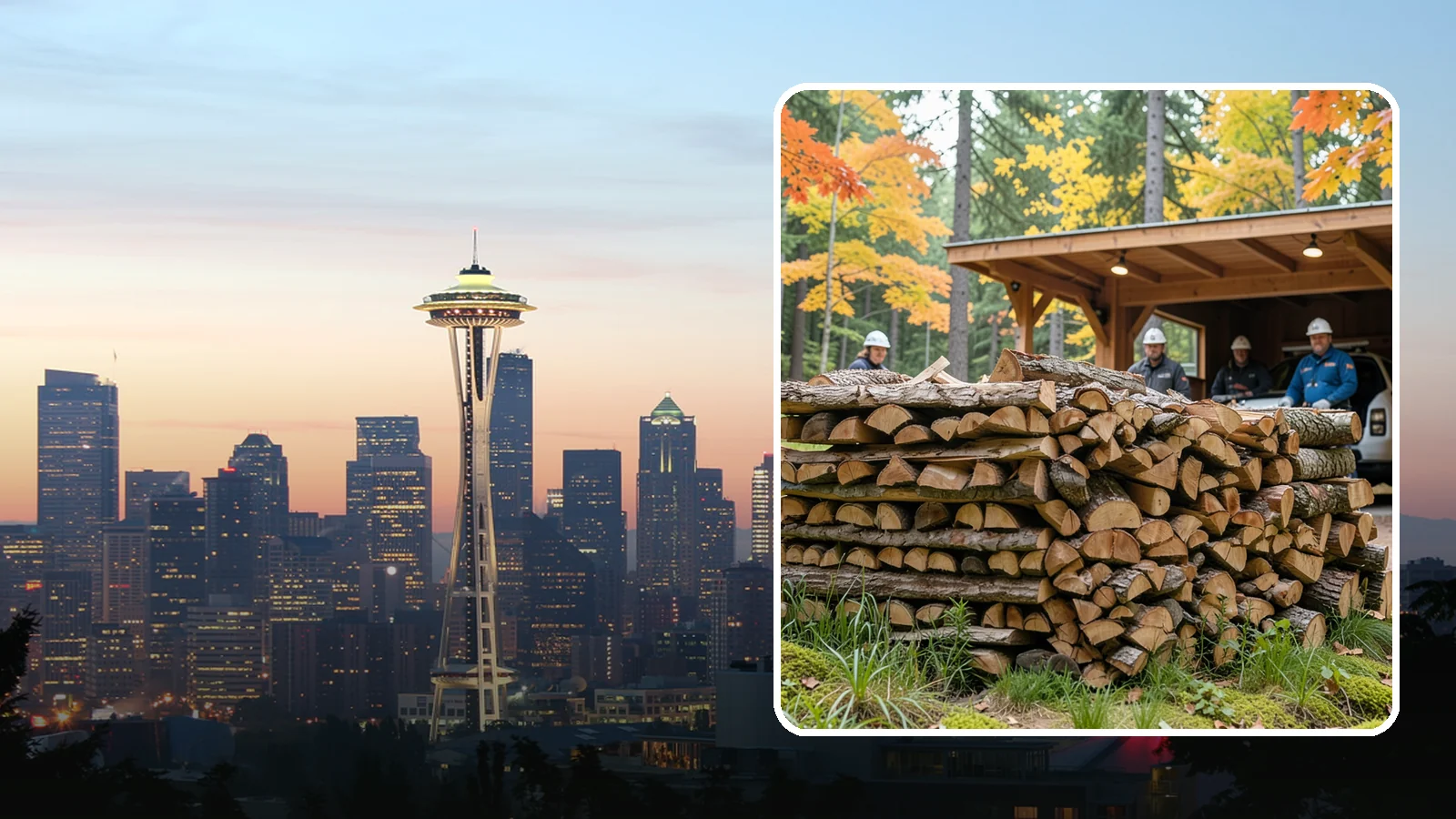
Seattle spreads across neighborhoods with very different rhythms, from Ballard and Fremont to Capitol Hill, Queen Anne, West Seattle, and the Rainier Valley, and firewood fits into all of them. Whether it is a woodstove in a Craftsman near the Washington Park Arboretum or a backyard fire pit within sight of the Space Needle, households across the city want split wood that is genuinely dry and ready to burn. We deliver cord and half-cord loads throughout Seattle so you can keep the home fires going through the gray, wet months.
Seattle’s dense grid means many deliveries involve narrow streets, steep driveways, and shared alleys, especially on the hills of Queen Anne and Capitol Hill. We plan each drop around the access a property actually has, whether that is a curbside stack for a rowhouse in Fremont or a driveway placement for a single-family home out near Discovery Park.
Site Conditions: City lots vary widely, so a load might land on a flat driveway, a tight parking strip, or a spot at the top of a stairway to a hillside home. We work with the access on hand and encourage a covered stacking area with open sides, since wood stored under Seattle’s steady drizzle needs airflow far more than it needs a fully sealed shelter.
Seasonal Considerations: Seattle’s burning season leans heavily on the damp, dark stretch from October through March, and orders spike as soon as the first real cold rain arrives. Getting wood in during summer or early fall gives it time to finish drying and spares you the scramble when demand peaks. Even seasoned wood benefits from a few weeks under cover before its first cold night.
Common Project Types: Across Seattle we fill half-cord orders for occasional fire-pit and fireplace use in dense neighborhoods, full cords for homes that heat with a woodstove, and recurring drops for households in West Seattle and the Rainier Valley that burn all season. Kindling bundles and fruitwood for cooking fires are frequent extras.
Property Styles: Seattle housing ranges from old Ballard and Wallingford Craftsmans to modern West Seattle townhomes, view homes on Queen Anne, and condominiums downtown. Yard space and storage differ street to street, so we scale load sizes to what a property can realistically keep dry, from a full side-yard stack to a compact covered rack on a small lot.
Local Materials & Plants: Seattle loads often lead with red alder, which seasons quickly and lights with ease, backed by big leaf maple for lasting coals and Douglas fir for reliable heat. When it is available we add fruitwood such as apple or cherry, prized for backyard cooking fires, plus cedar kindling to get a cold hearth going fast.
Planning Your Project: Because good firewood needs six to twelve months to season, ordering ahead of Seattle’s wet season beats waiting until the first frost. We schedule deliveries around city parking rules and tight driveways, and for households new to burning we can walk through how much covered, well-ventilated space a cord takes so the wood keeps drying rather than reabsorbing winter moisture.
From Ballard to West Seattle, order seasoned firewood you can trust and we will deliver it dry and stacking-ready to your door.